
No products in the cart.
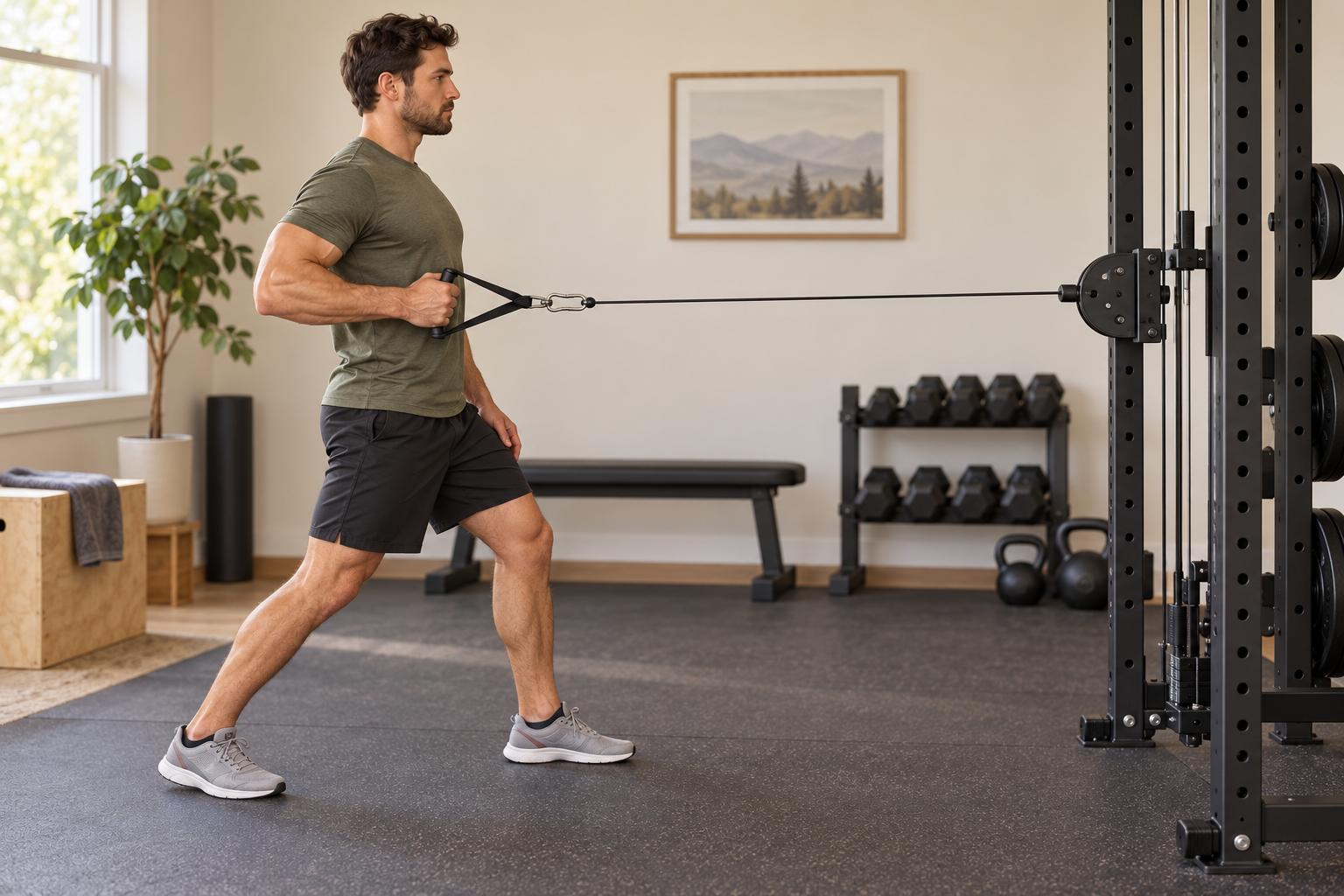
How to Set Up a One-Arm Cable Row Without Rotating Your Torso
Quick answer: To keep a one-arm cable row controlled, choose a stable stance, set the pulley and handle so the cable path is clear, use a load you can move without leaning or twisting, and let the shoulder and elbow do the pulling. If your chest turns toward the cable or your hips shift on each repetition, reduce the resistance or change your position. First confirm that the anchor and pulley are approved for the direction of force; a product’s load limit does not certify the rack, bar, beam, or installation.
Illustration note: The featured image is an AI-generated instructional illustration, not a photograph of a tested workout or a specific product.
Set the station before adding resistance
Use a cable system and attachment designed for the planned exercise. Follow the maker’s assembly and use instructions, and verify that the anchor is suitable for the pull direction. Do not attach a pulley to a convenient-looking bar or door point unless the equipment instructions permit that setup. Keep the path around the cable, plates, and your feet clear. The Waxman LAT and Lift Pulley System listing describes 70-inch and 90-inch sheathed cable options and several attachment arrangements, but it does not certify every external anchor or installation.
Place the pulley at a height that lets the handle travel toward your side without scraping the floor or pulling across your face. The exact height depends on the attachment and your body position; use the equipment instructions and an unloaded movement to check the path. Clip on a single handle only if it is compatible with the system and fully secured. Stand far enough from the pulley to begin with a slight reach, while keeping the cable taut only as directed by the manufacturer.
Choose a stance that resists rotation
Stand facing the pulley with feet about hip-width apart. A small stagger can make balance easier: keep both feet planted, knees soft, and weight distributed so you do not have to step or brace against furniture. Square your hips and chest toward the anchor. Keep your ribs over your pelvis and your spine comfortable rather than leaning backward to create momentum.
Take the handle in one hand and let that arm reach forward under control. Before pulling, check that your shoulders remain level and your free hand is not holding an unstable surface. If a staggered position makes you rotate or lose balance, return to a comfortable parallel stance or choose a seated variation only when your equipment and manufacturer instructions support it.
Pull with a repeatable range
- Start light. With the station unloaded or at its lowest safe resistance, rehearse the full movement. Confirm that the cable, attachment, and anchor stay aligned and that nothing shifts.
- Set your trunk. Gently brace as if preparing to be nudged. Keep your chest and belt line facing forward; avoid locking your breath.
- Row the handle. Pull your elbow back toward your side while keeping the wrist comfortable. Stop when the elbow reaches a position you can control without turning your shoulders or arching your back.
- Pause, then return slowly. A brief pause can help you notice whether your torso stayed steady. Let the arm straighten only as far as you can control without being pulled forward.
- Repeat on the other side. Match your stance and range. Use the same resistance only if both sides can perform the movement with control.
ACE’s exercise-library description of a single-arm row emphasizes a hip-width stance, tall back, slightly bent knees, feet pressing into the floor, and a controlled return. Treat that as general technique guidance, not a guarantee that every home pulley setup fits every user.
What to change when you twist
- Your chest turns toward the pulley: reduce the resistance, shorten the range, or move closer so the cable does not pull you off balance.
- Your hips shift or feet pivot: widen or stagger your stance slightly, then test the motion without added load.
- You lean back to finish: stop the pull earlier and use less resistance. Do not use momentum to force the handle farther.
- The anchor or equipment moves: stop immediately, unload the system safely, and inspect the setup according to the manufacturer’s directions before any further use.
- You feel pain, dizziness, or unusual symptoms: stop. Seek appropriate professional advice if symptoms persist or you have a health condition, injury, or uncertainty about whether this exercise is suitable.
Product information

Waxman Fitness LAT and Lift Pulley System, Dual Cable Machine
The listing describes 70-inch and 90-inch sheathed cable options and use with compatible anchor arrangements. Confirm the selected configuration, fit, and anchor requirements on the product page before purchase. Current price: View current price.
Price checked October 9, 2026; no current amount was available in the page view. Price and availability may change; see product page.
Keep the goal simple
A one-arm row is not a test of how much your torso can resist. The practical goal is a smooth pull and return that you can repeat with stable feet, a steady trunk, and a secure setup. Adjust one thing at a time—stance, distance, range, or resistance—so you can tell what improves control. If your equipment instructions do not cover the anchor or configuration you have, get clarification from the manufacturer instead of improvising.
Leave a Reply