
No products in the cart.
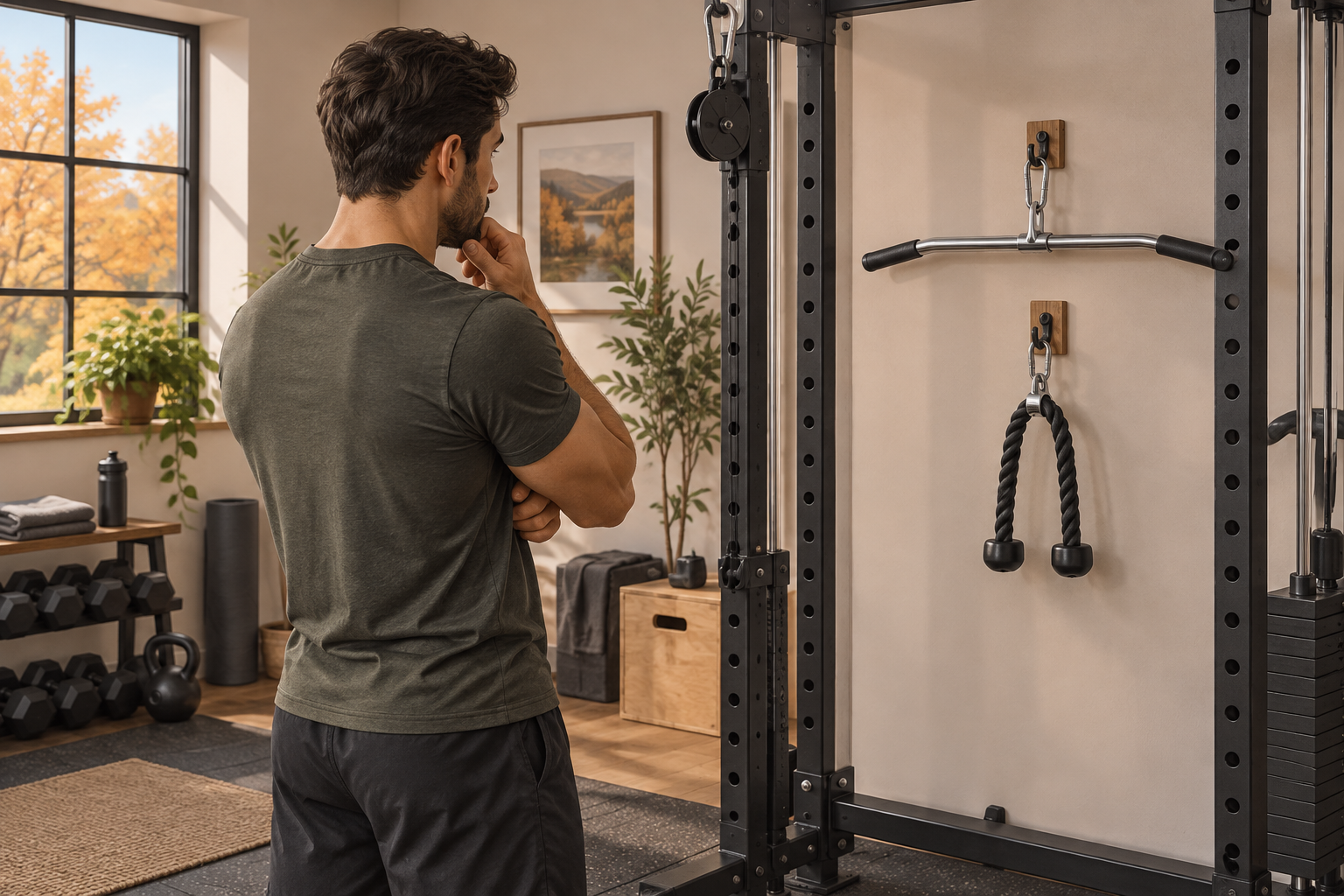
Straight Bar or Triceps Rope? Choose a Cable Pulley Handle by the Movement
Quick answer: Choose the cable handle that fits the movement you plan to do, gives you a secure grip, and lets the cable travel without hitting the rack or losing tension. A straight bar keeps both hands on one fixed attachment; a rope lets each hand hold a separate end. Neither is automatically better for every exercise. The Waxman listing includes both, but it does not publish a one-handle-per-exercise chart or a comparison proving that one produces better results.
What the two attachments change
A straight bar joins your hands across a single rigid attachment. That can be useful when your planned movement calls for a consistent hand position across the bar. Before adding resistance, check that the bar clears the rack and your body through the full movement path. A bar that is too wide for the space, catches on a post, or forces an uncomfortable wrist position is a poor fit for that particular setup.
A rope has two ends that can move more independently. Depending on the exercise and the way you hold it, that can let your hands stay closer together or separate during the movement. The listing calls the included accessory a “Tricep Rope,” but its description also names multiple exercises for the system. That product wording is not a detailed exercise guide, so do not assume the rope is required for every triceps movement or that the straight bar is wrong for it.
These are differences in how the attachment is held and moves. They do not establish that one handle is more effective, safer, or stronger for every person. There is no product-specific comparison or test result in the listing.
Match the handle to the exercise you will actually perform
- For a two-handed movement with a set grip width: Try the straight bar if it matches the hand spacing in your plan and clears the equipment throughout the range.
- For a movement where you want each hand to hold a separate end: Try the rope if it is the attachment specified by your instructions or training plan and both ends remain controlled.
- For a high or low cable route: Check the anchor and pulley position first. The handle does not correct an unsuitable cable route or change the system’s approved setup.
- If either grip feels forced: Stop and reconsider the exercise, handle, or setup. Do not twist your wrists or lean your body to make an attachment work.
The Waxman product page names pull-down and lift-up configurations, and lists biceps curls, triceps pull-downs, lat pull-downs, rows, and fly movements as examples. It also describes changing the connection between the hoist buckle and cable to select a mode. Use the supplied setup instructions for the exact connection method. The listing does not map every named exercise to a particular handle, nor does it verify that every home rack or overhead support is compatible.
Check fit and clearance before loading the system
- Confirm the anchor and mode. Use only the mounting point and cable route permitted by the manufacturer’s instructions. Make sure all connectors are closed and the pulley is secure.
- Attach one handle at a time. Verify the carabiner or connector closes fully and the handle cannot slip free. Do not add extra links or substitute hardware that the instructions do not approve.
- Rehearse without added plates. Move the handle slowly through the intended start and finish positions. Check that the cable stays in the pulley, maintains appropriate tension, and does not scrape or snag.
- Check your space. Make sure the bar, rope, hands, and body have room to move without striking the rack, wall, ceiling, or another person. Keep the suspended loading pin clear of feet and nearby objects.
- Add resistance only after setup passes. Start conservatively, move under control, and stop if the anchor shifts, the attachment rotates unexpectedly, or you lose the intended grip.
If you are following a coach’s program, ask which grip and range that program expects. If you are learning a new movement, a qualified exercise professional can help check technique. This article does not prescribe an exercise plan, load, or rehabilitation program.
What the product listing confirms
The Waxman Fitness LAT and Lift Pulley System listing describes 70-inch and 90-inch sheathed cables, a loading pin, and detachable handles. It names a straight bar and triceps rope among the included attachments and describes pull-down and lift-up configurations. The page displayed a price of $43.00 USD when checked October 9, 2026; availability was not stated in the content reviewed. Price and availability may change; see the product page.

Waxman Fitness LAT and Lift Pulley System
Listing describes a straight bar and triceps rope among the detachable handle options. Confirm the intended movement, attachment, cable route, and anchor before loading.
$43.00 USD · Checked October 9, 2026. Availability was not stated. Price and availability may change; see product page.
Written by Codex from the linked Waxman product listing. No product test, comparative handle study, or independent human review is claimed. Cover image: AI-generated illustration, not a product photo or test result.
Source
- Waxman Fitness LAT and Lift Pulley System product listing (included handle names, modes, exercise examples, price, and official image checked October 9, 2026).
Leave a Reply