
No products in the cart.
How to Train Safely in an Unheated Garage Gym During Winter
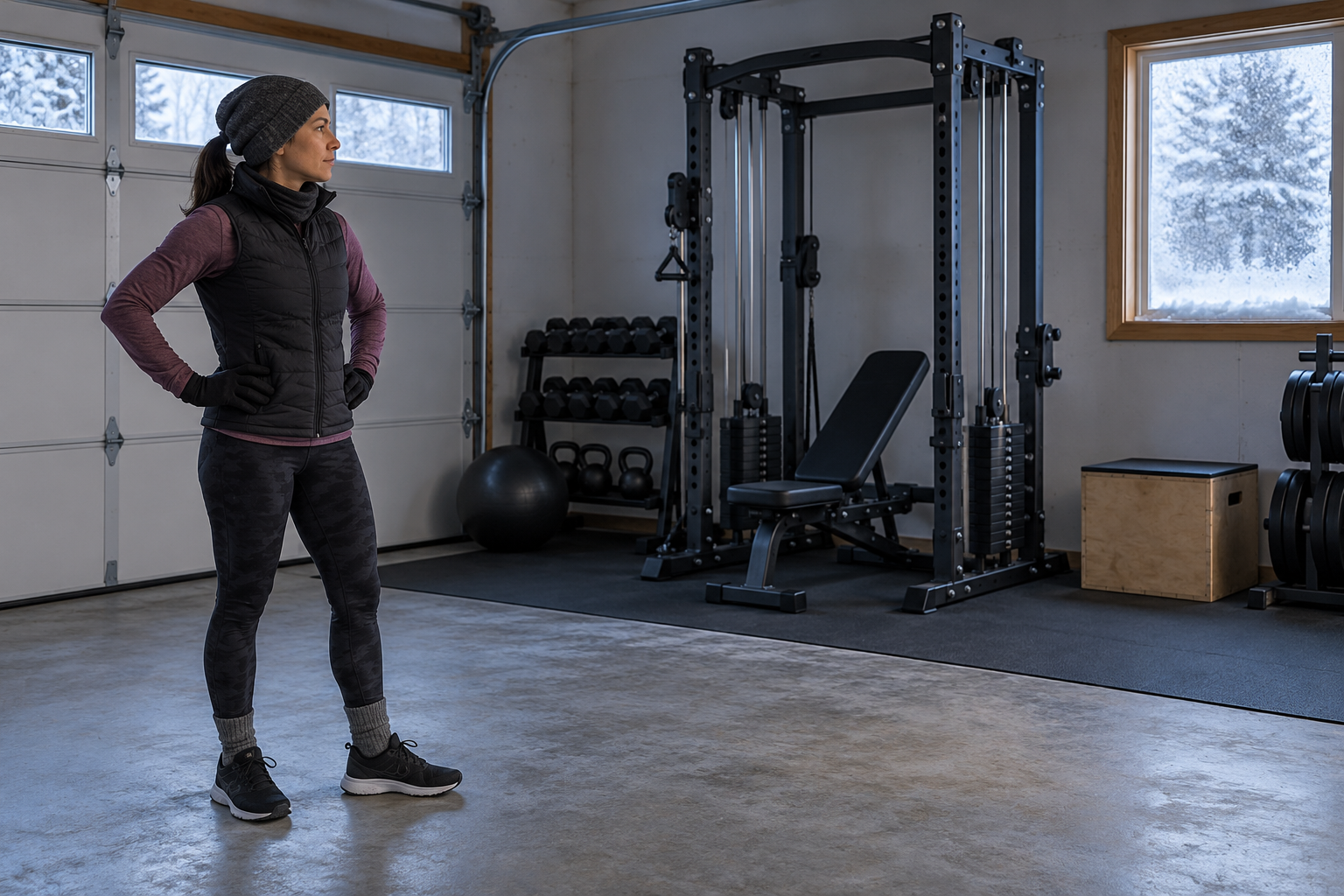
Cover image: AI-generated illustration for context; it is not a photograph of a Waxman product, a tested room, or a workout.
Quick answer: Do not judge a cold garage workout by the calendar alone. Check the actual room conditions, dampness, surface traction, your clothing and how your body feels. Warm up gradually, keep the session easy until you feel ready, and move indoors or stop if the space is extremely cold, wet, icy, or you develop warning symptoms. A warm-up is not proof that an unsafe environment has become safe.
Winter changes more than the temperature in a garage gym. Cold metal can feel uncomfortable to grip, a damp floor can become slippery, and bulky layers may interfere with a bar path or machine movement. There is no single room-temperature cutoff that makes every workout safe for every person, so make the decision from conditions and your own health rather than assuming a heater or extra clothing solves every problem.
Check the room before setting up
Look at the floor, equipment and route in and out before you load a bar or begin a set. Wipe up water tracked in from snow or rain, and do not train on a slick or icy patch. Check that the floor is stable and that your shoes have traction. Keep the exit path open, and make sure lights let you see handles, plates and safety catches clearly.
Notice whether the space is merely cool or persistently damp and cold. Damp clothing and wet skin increase heat loss. If the room is so cold that you are shivering before exercise, cannot comfortably handle equipment, or cannot move normally in your planned clothing, choose an indoor alternative. Do not bring an outdoor fuel-burning heater into a garage or use a heater in a way that conflicts with its label; carbon monoxide and fire risks are separate from exercise readiness.
Use a gradual warm-up, then reassess
Start with several minutes of easy whole-body movement in a clear area, followed by controlled, unloaded versions of the motions you plan to perform. Then use lighter resistance and a comfortable range of motion before working sets. Increase effort only if movement feels coordinated and the room remains tolerable. A longer or more gradual warm-up may help you transition into activity, but it cannot prevent every cold-related problem or replace appropriate medical advice.
Dress in layers that let you move freely. Avoid loose cuffs, drawstrings or bulky fabric that could catch in moving equipment. If you remove a layer as you warm up, put it somewhere dry and out of the workout path. Drink normally; cold conditions can make thirst less noticeable, but do not force a fixed amount of fluid based on a generic rule.
Keep equipment control and traction in view
Cold hands can make a secure grip harder. Before adding weight, confirm that your hands can comfortably hold the handle or bar and operate the equipment’s controls. If gloves make a grip less secure or interfere with a machine, do not wear them for that movement. Check that the equipment is dry and functioning as its manufacturer’s instructions describe. Set safety stops or catches while unloaded, and use a spotter when the lift or equipment instructions call for one.
Do not try to compensate for stiffness by forcing a deeper stretch, using momentum, or rushing through setup. Choose a lighter load or a movement you can control. If you have a medical condition that affects circulation, sensation, balance or response to cold, ask a clinician for advice about exercising in a cold room; a general article cannot set a personal safe temperature.
Know when to stop or move indoors
Stop the session and get to a warmer place if you develop persistent shivering, unusual clumsiness, numbness, confusion, slurred speech, or marked fatigue. CDC guidance identifies numbness and pale, waxy-looking skin among possible frostbite signs and confusion or slurred speech among hypothermia warning signs. Seek urgent medical help for suspected hypothermia or serious cold injury. Do not rub frostbitten skin or use direct high heat on it.
For many households, the safest winter plan is a simple option: use the garage only when the surface is dry, the conditions are manageable and movement remains controlled; otherwise move the session to a climate-controlled space or choose a rest day. Keep a thermometer if you want to track the room, but treat it as context rather than a universal pass/fail number. Temperature, humidity, wind entering through gaps, clothing, workout intensity and individual health all matter.
A short pre-workout checklist
- Is the floor dry, clear and non-slip?
- Can you grip and operate the equipment without bulky clothing getting in the way?
- Are safety catches, lighting and the exit route ready?
- Can you warm up gradually without shivering or losing coordination?
- Do you have a clear indoor alternative if conditions worsen?
If any answer is no, adjust the plan before loading equipment. The goal is a controlled session, not proving that you can train through the cold.
Sources and limits
This practical checklist draws on the American College of Sports Medicine’s guidance on exercise in hot and cold environments and CDC information about frostbite and hypothermia. Neither source provides a universal minimum temperature for every home gym. This article is general information, not individual medical advice or a claim that a particular machine has been tested in cold conditions.
ACSM: Exercising in Hot and Cold Environments · CDC: Preventing Frostbite · CDC/NIOSH: Cold-Related Illnesses
Leave a Reply