
No products in the cart.
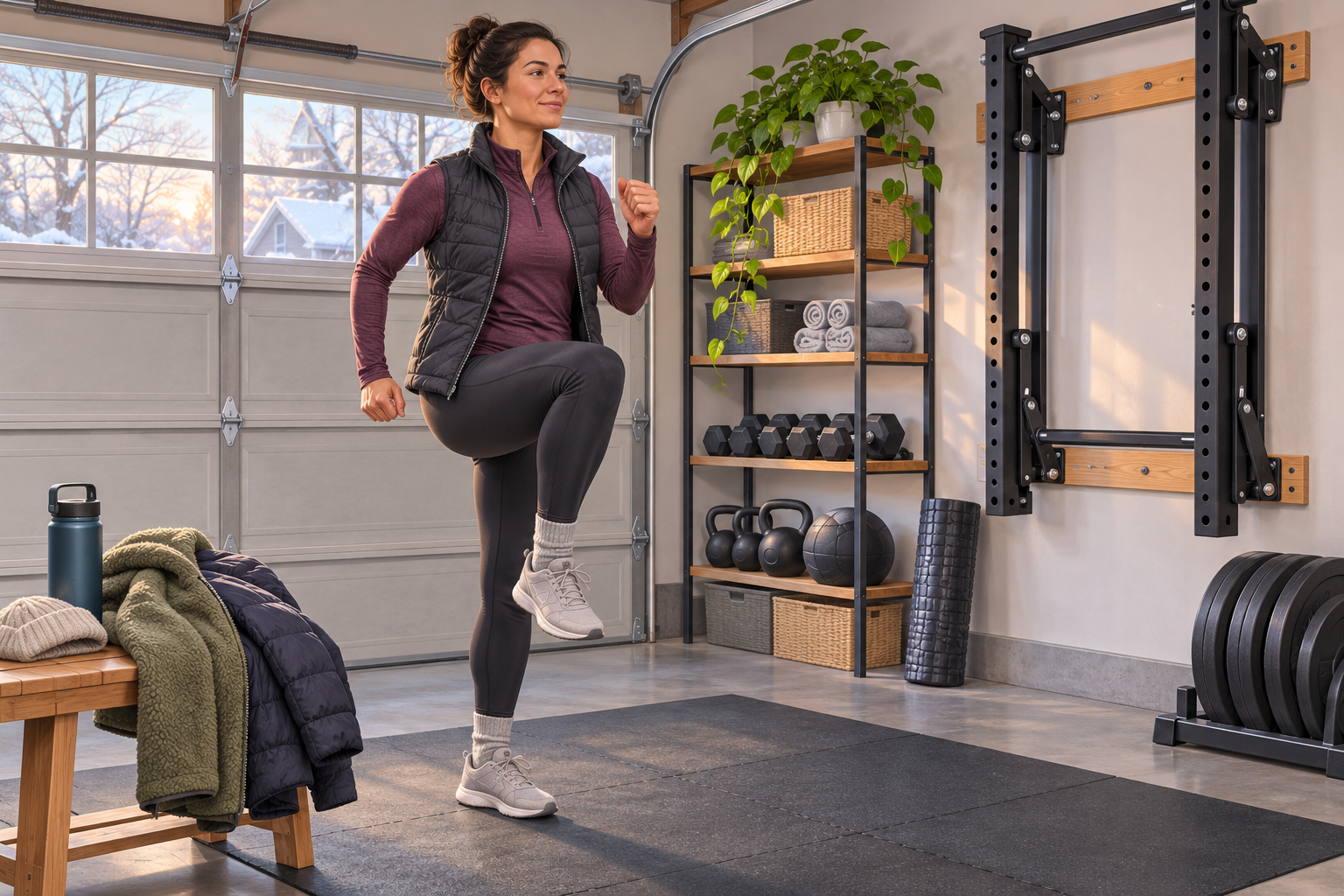
How to Warm Up for a Winter Home Gym Workout
How to Warm Up for a Winter Home Gym Workout
In a cold garage or spare room, take a few minutes to get comfortable before lifting. Start with easy whole-body movement, rehearse the movements you plan to train with no or very light resistance, and add load gradually. Wear layers you can remove as you warm up. A warm-up is a transition into exercise; it does not make an unsafe space, icy floor, damaged equipment, or severe cold safe.
Check the room before you start
First check the actual training area, not just the thermostat in another room. Look for damp or slippery flooring, condensation on equipment, blocked exits, and enough clear space to move and use the rack. Make sure lights are working and the equipment is set up as its manufacturer directs. If the floor is wet, icy, or unstable, dry it or move the session. Do not use an unvented fuel-burning heater in an enclosed garage; follow the heater manufacturer’s instructions and applicable safety guidance.
Decide whether the space is appropriate for exercise today. ACSM notes that cold exposure can create health risks and that conditions such as wind, dampness, and standing water matter alongside air temperature. If the room is uncomfortably cold, cannot be made safe, or you cannot stay warm and dry, move the workout indoors or postpone it. People with health conditions that can affect cold tolerance should follow advice from their clinician.
Use a gradual warm-up, not a race to sweat
Begin with several minutes of easy movement that raises activity gradually: walk around the room, march in place, or perform gentle arm and leg movements. Choose a pace that lets you speak comfortably. The goal is to prepare for the session, not to tire yourself before the first set. Federal physical activity guidance describes warm-up activity as a way to increase heart rate and breathing gradually before moderate or vigorous aerobic activity; it does not prescribe one universal routine or duration for every person.
Next, practice the patterns you will use. For a squat session, perform a few controlled bodyweight squats through a comfortable range. Before pressing, rehearse the motion with no load or a very light load. For a hinge, practice a slow unloaded hip hinge. Keep each repetition smooth, stop if a movement causes pain, and use a range of motion that feels controlled. These are simple rehearsal options, not a treatment or a guarantee against injury.
Ramp up the first working sets
After the general movement and practice repetitions, begin your first exercise below your usual working weight. Add weight in manageable steps only if the movement remains controlled and the equipment is secure. The exact number of warm-up sets depends on the exercise, training experience, and planned load; there is no single set-and-rep formula that fits everyone. If you feel stiff, shaky, unusually short of breath, or unable to control the movement, pause and reassess instead of forcing the planned weight.
For a rack-based lift, set safeties and attachments before loading the bar, confirm that pins or arms are secure, and keep the lifting area clear. Warm-up sets do not replace a pre-use equipment check or a spotter when your plan and experience call for one. If any part moves unexpectedly, stop and correct the setup before continuing.
Choose layers that stay dry
Wear comfortable layers that allow full movement and can be removed. CDC recommends layering for winter activity so clothing can be adjusted as you warm up; ACSM also cautions that excess moisture in clothing can increase cooling after exercise. Avoid loose sleeves, drawstrings, or bulky layers that can catch on equipment. Keep a dry layer nearby for the cool-down, and change out of damp clothing rather than sitting in it in a cold space.
Do not use a heavy coat if it restricts the movement or grip needed for a lift. If you need gloves for warmth, make sure they do not interfere with a secure grip or equipment controls. Warm the room safely when possible, but do not position a portable heater where it can contact clothing, equipment, or stored fuel.
Know when to stop
End the session and move to a warmer place if you become confused, unusually clumsy, persistently shiver, or develop numb or painful skin. CDC identifies cold-related illness and frostbite as hazards of winter exposure. Seek urgent medical help for serious symptoms or if you are unsure how severe they are. Do not treat a warm-up as a way to push through warning signs.
After the final set, lower activity gradually, put weights away safely, and change into dry clothing if needed. The practical rule is simple: prepare the space, start easy, rehearse the planned movement, build load gradually, and stop when the environment or your body signals that the session is no longer safe.
Sources
- CDC: 6 Tips to Stay Active This Winter
- CDC: Preventing Hypothermia
- American College of Sports Medicine: Exercising in the Cold
- ACSM: Exercising in Hot and Cold Environments
- U.S. Physical Activity Guidelines, 2nd edition
AI-generated illustration; illustrative, not a real workout or product demonstration.
Leave a Reply