
No products in the cart.
Why Do Olympic Barbell Sleeves Rotate, and How Much Spin Is Normal?
Quick answer: On an Olympic barbell, the outer sleeves are designed to rotate around the shaft. That lets the loaded plates turn as the bar changes orientation during a lift. The sleeve does not need to spin like a toy wheel when the bar is unloaded, and a quick free-spin test cannot by itself confirm whether a bar is in good condition. Compare it with the maker’s guidance for that exact model, and stop using a bar that appears loose, damaged, or abnormal under load.
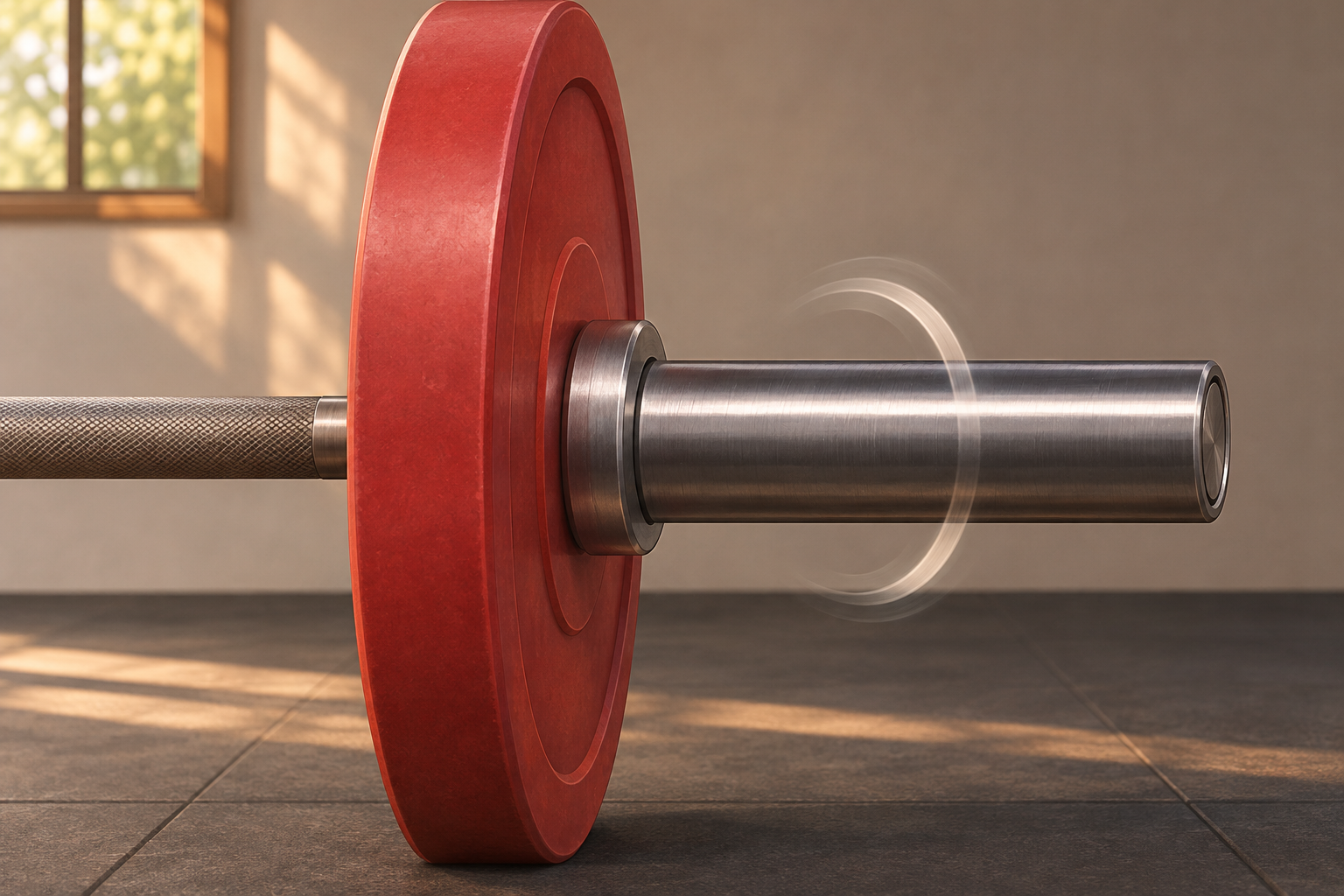
Cover: AI-generated illustration for explanation only. It is not a photograph, cutaway, measurement, or depiction of a tested product.
What rotates on an Olympic bar?
The bar has a central shaft that the lifter grips and thicker sleeves at each end where compatible plates are loaded. A bushing or bearing arrangement allows each sleeve to rotate relative to the shaft. In a lift where the bar turns in the hands, sleeve rotation lets the plates turn with the sleeve instead of forcing the loaded plates to remain fixed to the shaft’s orientation.
Different bars use different sleeve systems and are intended for different lifting styles. A maker may choose a bushing, bearings, or another design and tune how the bar feels. So there is no single unloaded-spin duration that applies to every Olympic bar. A slower sleeve is not automatically defective, and a sleeve that coasts for a long time is not proof that the bar is safe or well maintained.
Why does the sleeve spin less than expected?
First, consider what you are testing. A sleeve’s behavior while unloaded is different from its behavior with plates fitted. Friction, the construction of the sleeve assembly, the bar’s design, and its condition can all affect how freely it turns. A simple hand flick is not a standardized inspection and cannot tell you what mechanism is inside.
Also check that you are looking at the sleeve rather than the shaft. Hold the bar securely at the center and gently turn the sleeve by hand, following the manufacturer’s handling instructions. Do not put your fingers between the sleeve and another surface, stand the bar where it can roll, or load it just to see whether the sleeve moves. If you are unsure how the maker expects the sleeve to behave, ask for the manual or contact support with the model name.
What signs deserve attention?
Do not diagnose the bar from spin time alone. Instead, set it aside and seek model-specific guidance if you notice a sleeve that shifts axially more than the maker says is normal, visible damage, a new grinding or scraping sensation, binding, or a change that appeared after a drop or impact. Do not use a bar with a visibly loose or damaged sleeve for a loaded lift while you wait for an answer.
Do not remove the end cap, pull the sleeve apart, add oil, or try to tighten internal parts based on a generic online tutorial. Sleeve assemblies differ, and an incorrect lubricant or reassembly can cause damage. Follow the exact maintenance instructions for the bar. If those instructions are unavailable, contact the seller or manufacturer rather than experimenting.
How to make a useful comparison
- Identify the exact bar. Find a model number, receipt, end-cap marking, or product listing. Similar-looking bars may have different internals and intended rotation.
- Check the owner information. Look for a manual or maintenance page that names the model. Use its description of normal play, sound, and care rather than a universal internet threshold.
- Inspect without loading. On a clear, stable surface, look for visible damage and gently check the sleeve only as the maker permits. Keep the bar from rolling.
- Record what changed. Note which sleeve is affected, whether the sound or feel is new, and whether the issue followed a drop, storage change, or cleaning. This helps support assess the issue without you dismantling the bar.
- Wait for a clear answer. If something seems loose, damaged, or binding, do not test it with plates. Ask the manufacturer or a qualified equipment technician what inspection or service is appropriate.
Product details are not a sleeve-performance test
The Waxman 7-foot Olympic bar listing describes compatibility with 2-inch weights. That identifies the type of plates it is intended to fit; it does not state a measured sleeve spin time or establish how the internal sleeve mechanism should feel. The live listing could not be retrieved during this check, so current price, availability, and any additional specifications are not stated here. Consult the product page or seller for current details and model-specific guidance.

Waxman 7-Foot Olympic Barbell
Official listing describes a 7-foot Olympic bar and 2-inch weight compatibility. Sleeve construction and spin behavior are not specified in the available listing details.
View current price and availability on the product page.
Product page checked November 4, 2026; it timed out, so price and availability could not be confirmed. Product details may change.
Bottom line
A rotating sleeve is part of an Olympic bar’s design, but how freely it turns while unloaded is not a universal pass-or-fail test. Identify the exact model, follow its care instructions, and ask the manufacturer about new looseness, damage, grinding, or binding. Do not dismantle or load a bar that appears damaged while its condition is uncertain.
Sources
- Eleiko, “Understanding Barbell Rotation” — explains sleeve rotation and that bar construction is tuned to lifting style.
- Hammer Strength / Life Fitness, Barbell Buyer’s Guide — describes bushings and bearings as sleeve rotation mechanisms.
- WaxmanUSA product listing — listing identity and plate compatibility; live page timed out during this check, so no current price, availability, or unverified performance specification is claimed.
Sources checked November 4, 2026. This guide is general product education, not an inspection or repair instruction. No barbell was tested.
Leave a Reply