
No products in the cart.
How Do You Calculate the Total Weight on a Barbell?
Quick answer: Add the bar’s empty weight to the weight of every plate loaded on both sleeves. For equal plates, a quick formula is: total = bar weight + 2 × the plates on one side. A 45-pound bar with one 25-pound plate on each side weighs 95 pounds before collars or other attachments. Check the exact bar label or listing first; not every bar weighs 45 pounds.
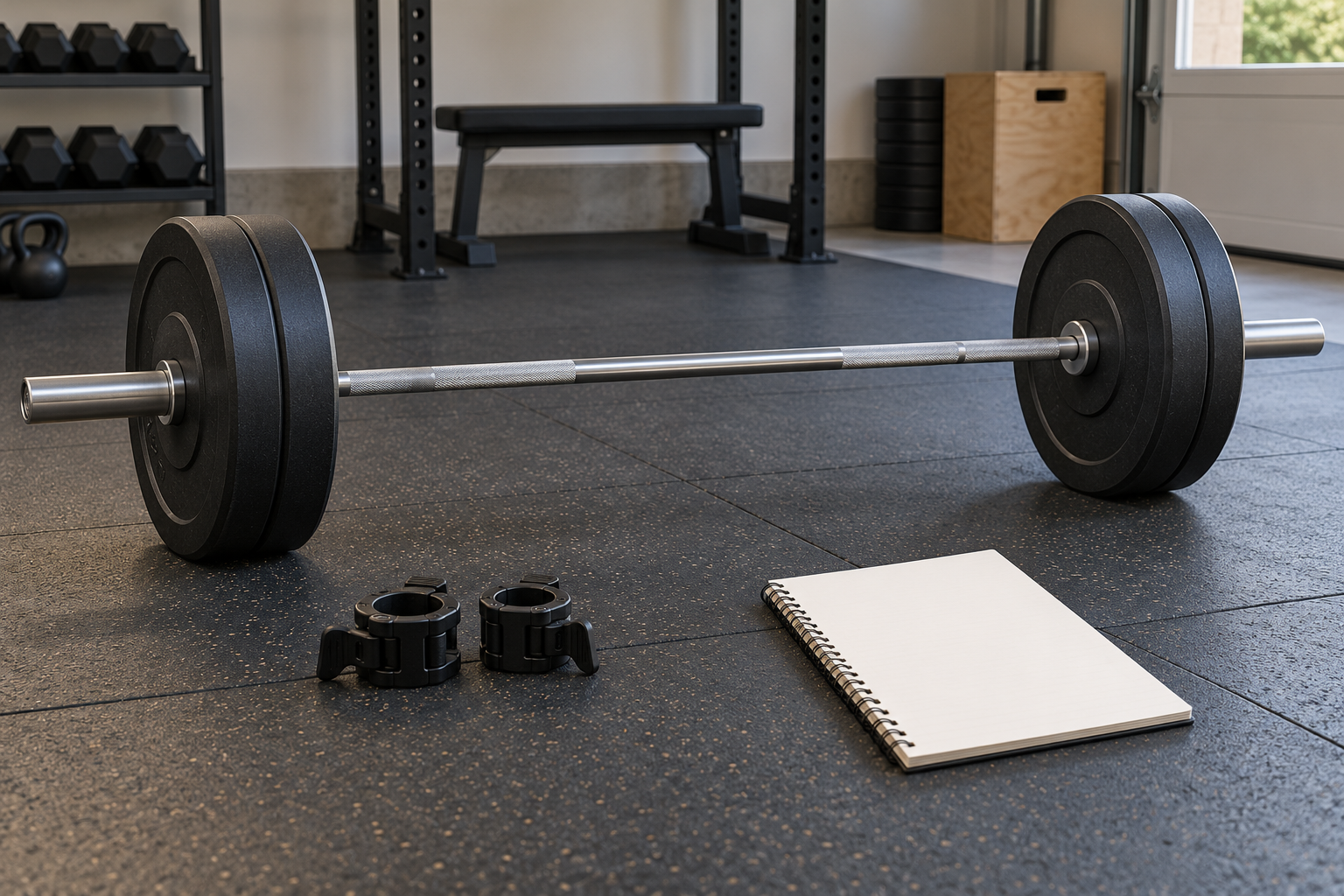
Cover illustration: AI-generated home-gym illustration for explaining a weight calculation; not a product photo, measurement, or lifting test.
Use this simple equation
Write down the bar weight, then add every loaded plate. If the load is balanced and both sides match, add the plates on one side and double that number before adding the bar. If the two sides do not match, add each side separately; do not use the shortcut.
Total barbell load = empty bar + left-side plates + right-side plates.
For example, a 45-pound bar with a 25-pound plate on each end is: 45 + 25 + 25 = 95 pounds. If you put a 45-pound and a 10-pound plate on each side, the total is 45 + (45 + 10) + (45 + 10) = 155 pounds. These are arithmetic examples, not a recommendation for how much to lift.
Do not forget the bar
Plate labels show the weight of the plates, not the whole barbell. If you log “25s on each side,” write down whether you are recording the plates alone or the total lifted load. Consistent notes prevent comparing unlike numbers across workouts.
Check the model label, manual, or manufacturer listing for the empty bar weight. The Waxman homepage currently lists its 7-foot Olympic barbell as 45 pounds. Other bars may be lighter or heavier, including technique bars and specialty bars. Do not infer a bar’s weight from its length, color, sleeve diameter, or a photo.
Count plates on both sides
A common counting slip is to add one side’s plates once and stop. On a standard balanced setup, the same plate stack sits on each sleeve, so the plate subtotal is doubled. Before lifting, look at both ends and verify that the plate count and order match. If one side is different, do not proceed simply because the arithmetic works out; correct the setup and follow the equipment instructions.
Keep pounds and kilograms separate. If equipment uses mixed units, convert to one common unit before adding, then record which unit you used.
What about collars and attachments?
Decide whether your log includes collars and use that convention consistently. Collars and attachments add weight; check or weigh them if an exact total matters rather than assuming they weigh zero.
Chains, bands, and specialty attachments change what is being measured. Do not add their listed resistance to the bar-and-plate total unless the maker or your program defines how to count it; elastic resistance is not a fixed plate load.
Check the equipment limits separately
The arithmetic does not prove that the bar, plates, collars, rack, or safeties can carry the load. Follow each maker’s limits and instructions; inspect the equipment and secure the plates before lifting.
If you are unsure whether a plate fits the sleeve or whether a rack supports the bar, stop and check the exact model specifications. Never use a mismatch, a loose collar, or an unbalanced stack as a substitute for confirming compatibility.
Quick check before your set
- Confirm the bar’s empty weight and the unit.
- Read every plate on the left and right sleeve.
- Add the bar and all plates; double one side only when both sides match.
- Decide whether your log includes collars or attachments.
- Verify the setup against the equipment limits and secure every plate before lifting.
Product example
Waxman’s homepage lists a 7-foot Olympic barbell at 45 pounds and says it fits 2-inch weights. That listed bar weight can be used in the formula above, but it does not tell you the loadable sleeve length, compatibility with every rack, or a safe working load for your full setup. Verify those details for your own equipment.
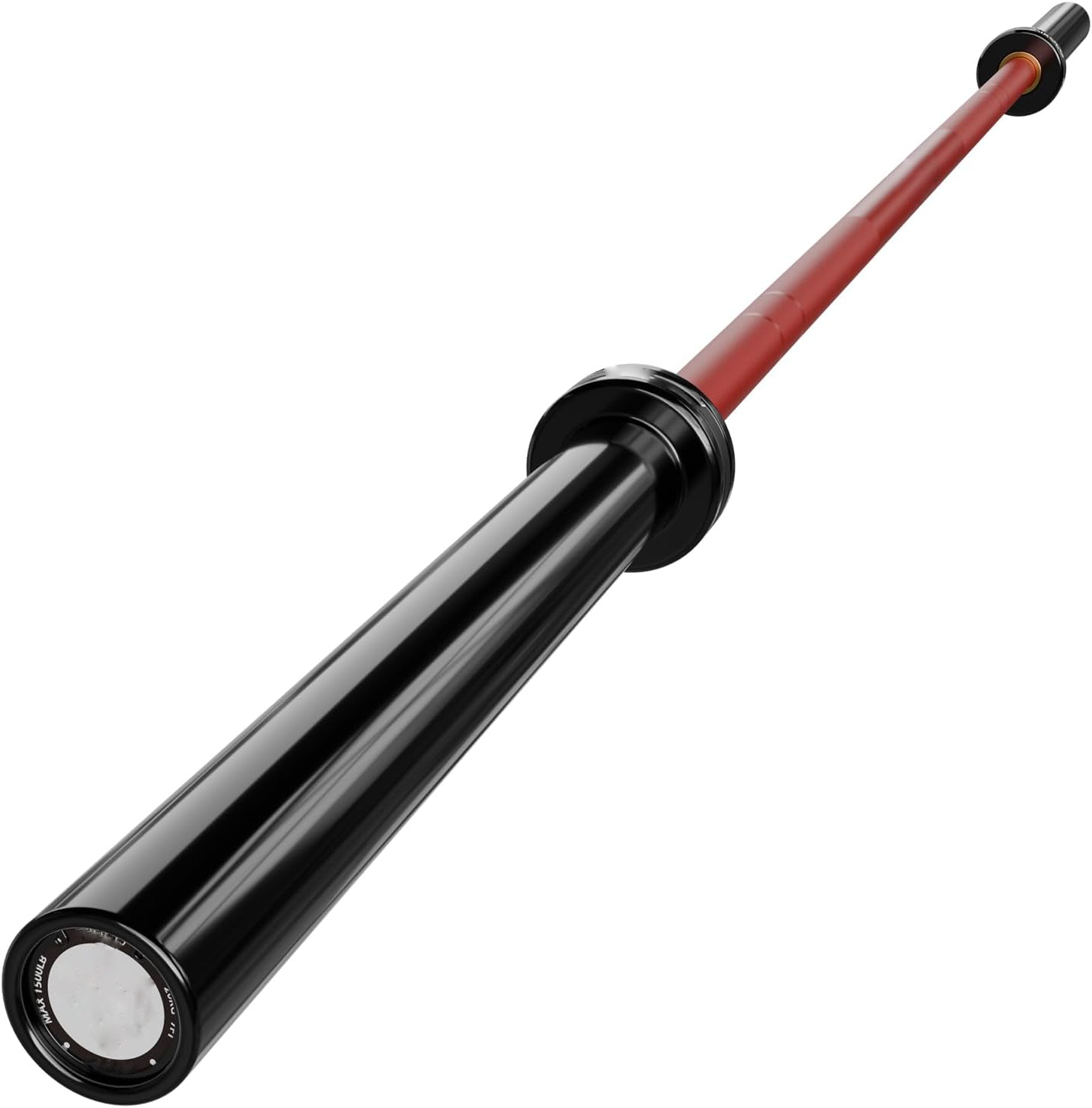
The homepage lists a 45-pound bar for 2-inch weights. Check your plates, rack, collars, and their limits separately.
$69.00 USD (checked October 19, 2026). Availability was not stated on the current homepage listing.
Price checked October 19, 2026. Price and availability may change; see the product page for current details.
Bottom line
Count the empty bar and both plate stacks, keep pounds and kilograms separate, and be clear about whether collars are included. The calculation is straightforward; confirming that every component fits and can safely carry the load is a separate check.
Sources
- WaxmanUSA homepage equipment listing (listed bar weight, plate type, and price)
- Waxman 7-foot Olympic barbell product details
Written by Codex from the linked product information. No hands-on test or independent human review is claimed.
Leave a Reply