
No products in the cart.
How to Protect a Home-Gym Barbell From Winter Moisture
Quick answer: Keep a garage-stored barbell clean, dry, and away from recurring condensation. After training, wipe sweat and chalk from the shaft; check the knurling and sleeves regularly; and move the bar away from damp walls, windows, and floors. If rust returns or the garage stays humid, address the moisture source before applying any cleaner or lubricant. Care depends on the bar’s finish, so follow its manufacturer instructions.
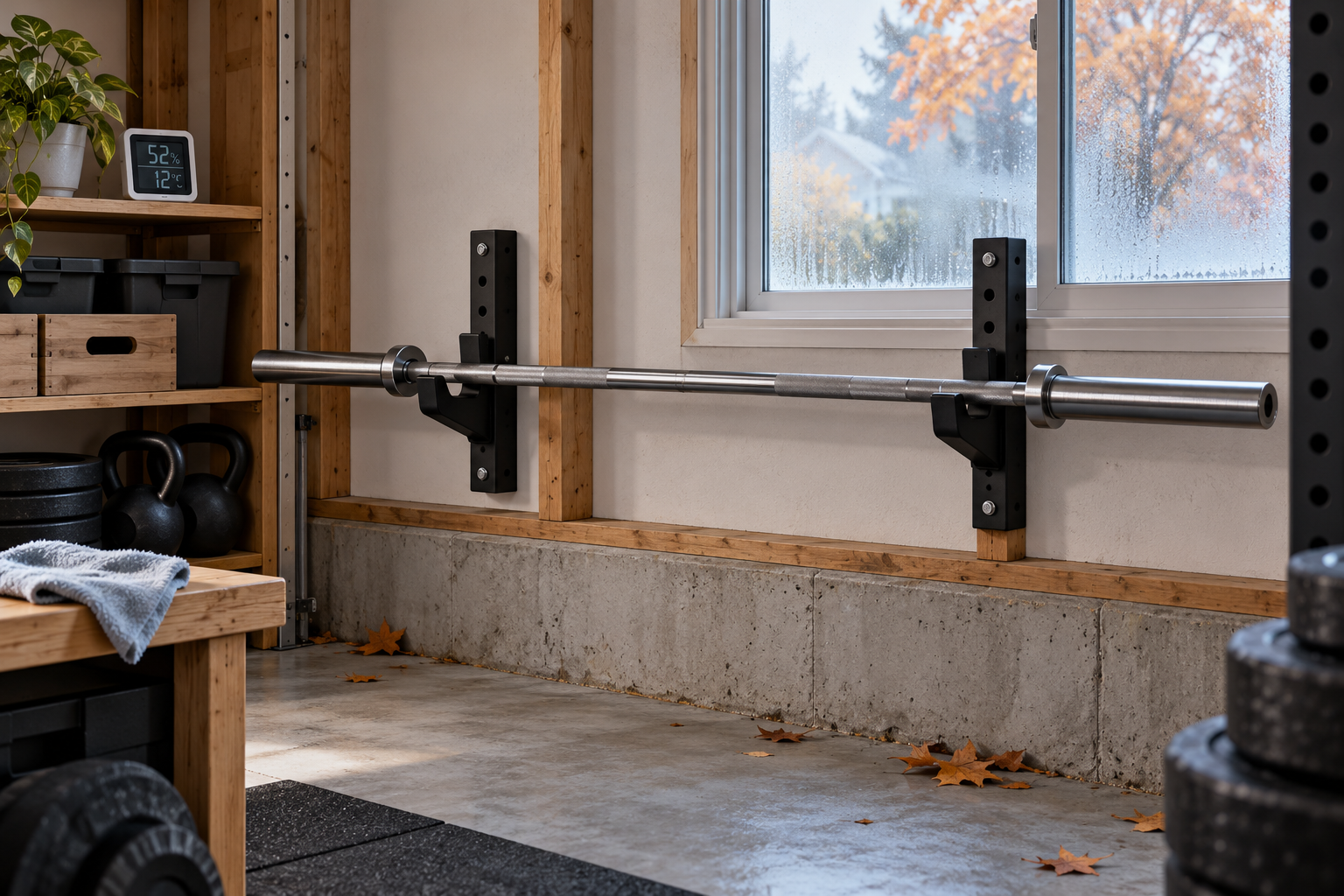
Cover illustration: AI-generated example of a tidy garage gym and moisture checks. It is not a product photo, a measured reading, or a test.
Why fall and winter garages need a check
Cold weather alone does not tell you whether a bar will corrode. The practical issue is moisture: damp air, sweat left after a workout, leaks, and condensation can leave a thin film on steel. The Canadian Conservation Institute explains that metals generally corrode faster in moist conditions and that relative humidity is an important factor. Its museum-storage targets are not consumer-gym requirements, but the basic lesson applies: keep metal clean and dry, and pay attention to the environment around it.
A garage can change quickly when a cold surface meets warmer, humid air. Watch the bar, nearby windows, and concrete for visible dampness after temperature swings. Do not infer a corrosion problem from one cold morning; look for repeated moisture, residue, or orange-brown spotting.
Use a short post-workout routine
- Remove sweat and chalk. Wipe the shaft and sleeves with a clean, dry cloth after lifting. Chalk and grime can collect in the knurling, so use a brush suited to the bar’s finish when needed.
- Inspect the full bar. Rotate it under good light and check the shaft, knurling, sleeve edges, and any chipped or worn areas. Note whether a spot is loose dust, residue, or a surface change; do not aggressively scrape plating or coating.
- Store it off damp surfaces. Use a stable rack or storage point that is appropriate for the bar and securely installed. Avoid leaning it where it can roll, fall, or block a walkway. Keep it away from a window that repeatedly sweats and from direct contact with a wet floor.
- Control moisture at the source. Repair leaks, reduce water tracked in from outside, and improve practical ventilation when weather allows. A basic hygrometer can help you notice patterns, but a single reading is not a diagnosis and a museum conservation threshold should not be treated as a home-gym guarantee.
Be cautious with oil and cleaning products
There is no universal lubricant routine for every barbell. Coatings and finishes differ, and oil left on a grip surface can make handling slippery. Life Fitness’s barbell-care guidance recommends brushing chalk from knurling and describes using a quality oil-based lubricant for stubborn residue or surface rust, followed by thoroughly wiping away oil. It also cautions that brush material matters for different finishes.
Use that as an example of why finish-specific directions matter, not as a blanket instruction for another brand. Check the care guidance for your bar before applying oil, solvents, abrasives, or a steel brush. If the finish is unknown, start with a dry cloth and contact the manufacturer before using a chemical treatment. Keep products away from plates, rack pads, flooring, and hands until the bar is clean and dry.
When a spot needs more than routine wiping
Light surface discoloration may be manageable with the manufacturer’s approved cleaning method. Stop and ask the manufacturer or a qualified equipment service professional if rust is spreading, pitting is visible, a sleeve feels rough or binds, the knurling is flaking, or the bar has been exposed to standing water or chemicals. Do not assume a bar is structurally sound simply because it still rotates or looks polished. Never use a corroded or damaged bar for a lift if its condition is uncertain.
Choose storage equipment by fit, not by appearance
A holder can keep a bar away from the floor, but its mounting surface, fasteners, spacing, and load suitability must match the specific product and wall. This article does not verify a particular rack or bar-holder installation. If you are comparing a barbell, the Waxman 7-foot Olympic Barbell is listed on the official site as 45 lb and compatible with 2-inch weights; verify your own storage setup and the current product details before purchase.

Waxman 7ft Olympic Barbell
Official site listing: 45 lb; fits 2-inch weights. Price checked October 19, 2026: $69.00 USD on the official homepage. Availability was not stated in the information checked. This is a product listing, not a verified storage recommendation.
Price and availability may change; see the product page.
A simple seasonal checklist
- Wipe the bar after sweaty sessions and brush residue with a finish-appropriate tool.
- Check for repeated condensation, leaks, and damp storage surfaces.
- Keep the bar stable, dry, and off the floor.
- Follow the exact manufacturer’s maintenance guidance before using oil or chemicals.
- Get help if corrosion is active, pitted, or affects a sleeve or grip surface.
These steps reduce avoidable moisture exposure; they cannot guarantee a rust-free bar or replace care instructions for its specific finish. For additional guidance, see Life Fitness barbell care and the Canadian Conservation Institute notes on metal storage.
Leave a Reply